
Medical Imaging Equipment Trends and Installation Challenges Healthcare Facilities Should Know
Recent medical imaging equipment trends show that buying a scanner is only one part of expanding diagnostic capacity. Hospitals also have to plan for power, room access, connectivity, staffing, maintenance, patient flow, and the transition from an existing system to a new one. Those details determine how quickly the investment becomes usable.
At Imaging Solutions, we have supported hospitals, clinics, and health systems since 1997. Our services include mobile MRI, CT, and PET/CT, modular suites, permanent installations, integration, staffing, and service. That range lets us approach medical imaging trends from the facility side, where equipment decisions must work within an active department.
Healthcare Technology Trends: What Is Changing the Equipment Decision?
Newer scanners are more connected to the rest of the department, so site planning now includes data systems and workflow as well as physical installation. Power, access, PACS connectivity, or staffing issues can delay a project even when the equipment is ready.
Our process starts with the facility’s operating needs. We review patient volume, scheduling, site logistics, space, power, accessibility, and connectivity before delivery. The system must match the building and workload, not just the specification sheet.

What Does MRI Equipment Market Growth Mean for Capacity Planning?
Global MRI demand continues to rise. Grand View Research valued the MRI market at $7.1 billion in 2024 and projects it to reach $10.3 billion by 2030, a 6.5% compound annual growth rate from 2025 through 2030.
That MRI equipment market growth does not mean every facility needs a permanent suite immediately. A high-volume hospital may benefit from a fixed installation, while a lower-volume or expanding site may need routed, fixed-mobile, or interim access first. We use those distinctions to match capacity with actual patient demand instead of treating market growth as a reason to overbuild. These choices are becoming a practical part of medical imaging equipment trends.

Diagnostic Imaging Industry Trends Are Making Installation More Operational
A scanner installation now touches clinical workflow, IT, facilities, engineering, and staffing. Diagnostic imaging industry trends therefore place more pressure on coordination before the equipment arrives. Room layout, shielding, environmental preparation, PACS or EMR connectivity, delivery access, and staff readiness all affect the final timeline.
For permanent projects, we coordinate site planning, equipment selection, installation, testing, integration, training, and ongoing service. That structure keeps the project tied to day-to-day operations and reduces the chance that a technical upgrade creates a new workflow problem.
Medical Equipment Downtime Statistics: Why Does Contingency Planning Matter?
A 2026 hospital study covering 250 pieces of commonly used medical equipment reported an average downtime index of 8.78%. Inadequate maintenance accounted for 25.28% of identified downtime causes. The study was not limited to imaging systems, so the figure should not be treated as a radiology benchmark, but it shows how maintenance gaps can reduce equipment availability.
For an imaging department, one offline MRI or CT unit can disrupt an appointment schedule. We provide interim mobile systems during failures, renovations, replacement projects, and periods of rapid growth. This is one reason medical imaging equipment trends increasingly include flexible capacity and service planning alongside the equipment purchase itself.
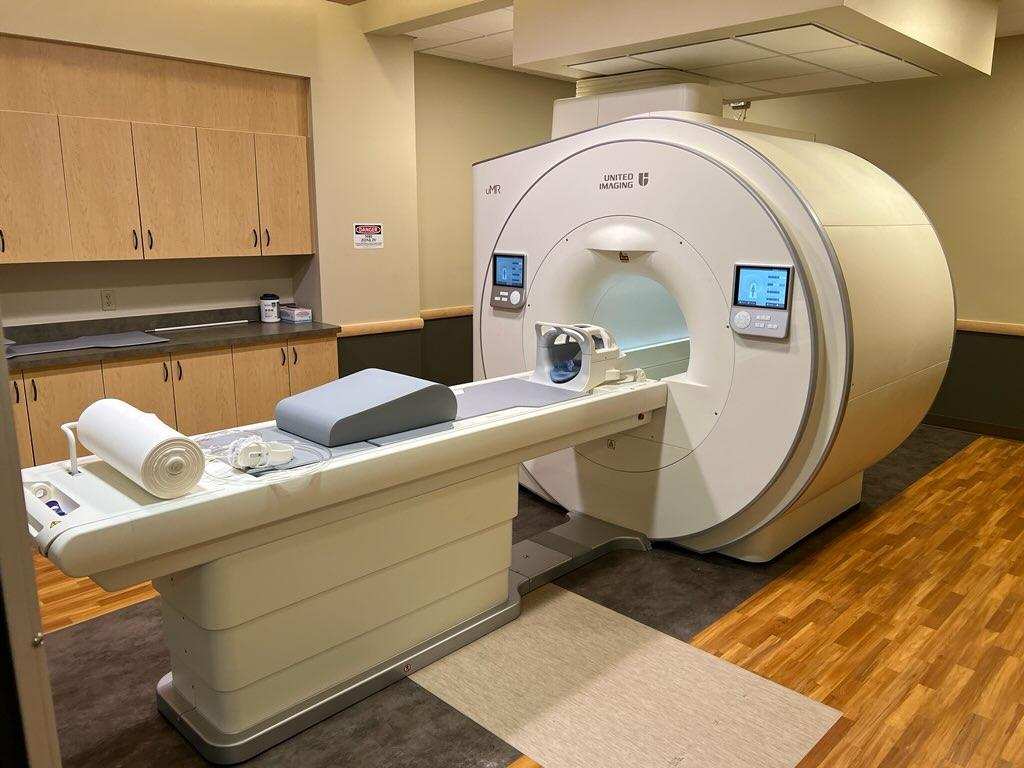
Healthcare Equipment Modernization Requires More Than a New Scanner
Modernization works best when you plan the transition as a sequence rather than a delivery date. We consider medical imaging equipment trends alongside the existing site, current systems, and the point when new equipment can enter the clinical schedule.
Site Readiness Comes Before Delivery
Our team verifies power, spacing, accessibility, connectivity, and other site requirements before the unit arrives. That gives the facility time to correct practical issues before installation begins and keeps site preparation aligned with the planned delivery schedule.
Integration Has to Match Existing Systems
New equipment has to communicate with the facility’s PACS, RIS, EMR, and network environment. We coordinate integration and test performance before scanning begins so data transfer is part of go-live planning, not a problem discovered after installation.
Staff Preparation Supports a Cleaner Go-Live
A new scanner may change protocols, software, controls, or daily routines. Our applications specialists provide training, protocol assistance, start-up support, and cross-training so technologists are prepared before normal scheduling begins.
Service Planning Continues After Installation
Installation does not remove the need for preventive maintenance, quality checks, technical support, and repair planning. Our OEM-trained engineers provide an ongoing support path after the system enters routine use.

Radiology Technology Advancements Need the Right People Around Them
More capable systems can support faster or more detailed imaging, but equipment does not operate independently. Radiology technology advancements still rely on trained technologists, sound protocols, reliable connectivity, and access to service. Our technologist and applications support can cover short- or long-term staffing needs for MRI, CT, and PET/CT. We also provide start-up assistance and skills development.
Future of Medical Imaging: How Should Facilities Prepare?
Preparation starts with capacity, not equipment popularity. Before choosing mobile, modular, or permanent options, a facility should know expected volume, acceptable downtime, staffing limits, and available space.
For us, the future of medical imaging is about fitting the service model to the facility. Current medical imaging equipment trends support that approach because organizations have more ways to add capacity without forcing every project into the same construction model.

Plan for Medical Imaging Equipment Trends With Imaging Solutions
Contact Imaging Solutions to discuss how medical imaging equipment trends can inform a practical plan for capacity, installation, and long-term operations.
Can modular suites support permanent use?
Yes. Modular buildings can house MRI, CT, or PET/CT systems and can include control, patient preparation, and waiting areas.
How quickly can an interim unit be deployed?
Timing varies by location, modality, site readiness, and availability. Some mobile units can be operational within days.
Does Imaging Solutions provide temporary technologists?
Yes. Our certified staff is available for short-term gaps, new service lines, transitions, and longer-term coverage.
What should a facility review before selecting a new scanner?
Consider patient volume, space, utilities, staffing, workflow, connectivity, service requirements, and future capacity before making the final equipment decision.
Can a mobile unit connect with a hospital’s existing data systems?
Yes. Integration can include PACS, RIS, EMR, and network connections after site and IT requirements are confirmed.